The academic landscape is evolving with an unprecedented speed. Advances in technology are changing the delivery of syllabus materials, coupled with international student expectations for flexible, future-oriented learning, and universities are facing global challenges in higher education on an ongoing basis and cannot respond to these changes alone - we require leadership that is engaged, anticipatory, and progressive.
This is why we have seen a shift in the sophistication of leadership forums in higher education institutions from a networking opportunity to a barring point to rethinking and refreshing our strategic initiatives. These forums are where heads of university sectors, higher education policy makers and innovators meet and engage in dialogue to formulate a strategy for the new world of learning. They do the work of defining, refining and implementing institutions for leadership in higher education.
Here at UniNewsletter, we understand how vital these discussions are, which is why we’ve partnered with the leading regional platform driving change: the MENA Higher Education Leadership Forum (MENAHELF).
Leadership: The Engine of University Innovation
It is not new software that drives innovation within a university, but rather a courageous decision from the top. Strong, agile leadership is the one greatest element in determining whether or not an institution has the capacity to innovate and prosper.
The leadership's role in the matter of higher education innovation goes beyond ensuring day-to-day operations — it's creating the collective vision and plan of innovating and thinking innovatively, with robust governance that meets national and regional agendas. Leaders need to create and support the environment that enables and supports such plans, empowering teams, partners, and institutions to go from conception to action.
To make this happen, university leaders should:
- Promote Institutional Flexibility: Leaders must foster a culture that empowers faculty and staff to innovate and see failure as a chance to learn, not something to fear.
- Facilitate Digital Transformation: Leaders must do more than buy new hardware, they must find ways to implement technology in the academic mission, and promote the systems to include both students as well as researchers.
- Facilitate International Partnerships: Leaders must find and facilitate action on opportunities to collaborate with universities, industries, and governments around the globe.
Without these intentional actions, the best idea, and the most talented faculties will continue to be a series of projects, or a patch work of reforms, rather than ongoing system wide reform. In fact, a recent national survey showed that the average staffing level for academic innovation units in higher education grew significantly from 6.4 full-time staff in 2014 to 30 in 2024, demonstrating the massive institutional investment being driven by leadership in this area (Source: University of Michigan).
Challenge yourself: Is the culture in your organization designed to celebrate people who think differently, or must people be careful and potentially be disciplined for trying something new?
What Are Leadership Forums in Higher Education?
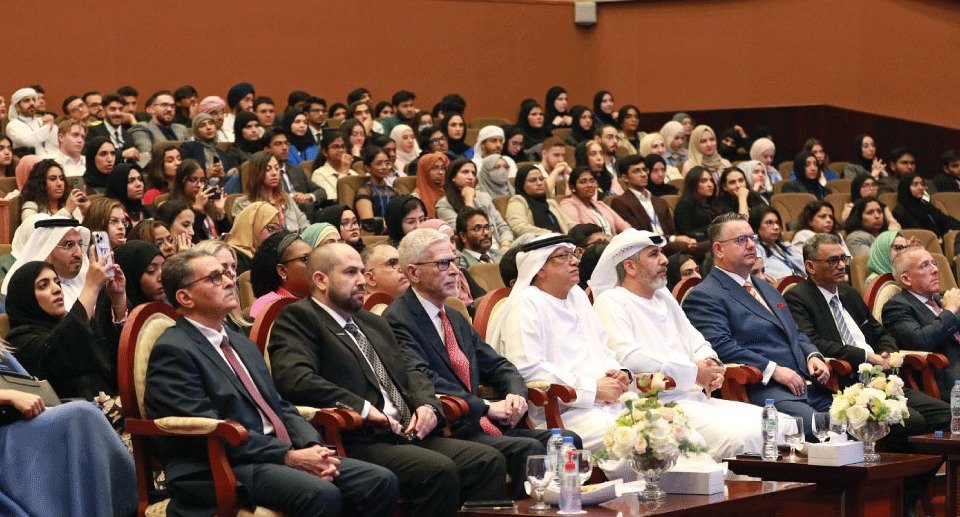
A higher education leadership forum is more than just a conference. These
are fully immersive, high-level summit experiences/engagements, designed
for presidents, vice-presidents, deans, and senior officers of
universities. They are designed for deep dialogue and meaningful
collaboration, without exhausting time on institutional competition.
There is always a sense of "nextness," addressing the necessary questions:
how can we make our universities ready for the future? What models will we
use to serve our diverse student populations more effectively?
As these convenings happen all over the globe—some are regional, while
others are large-scale global higher education forums —oftentimes
the best learning and change happens when individuals focus on
multi-faceted issues in a targeted region. This is where the power of
specialized forums shines.
Among the numerous forums leading the charge of leadership in tertiary
learning, the MENA Higher Education Leadership Forum stands out. While
leadership forums across the globe lead the charge of innovation, MENAHELF
illustrates how international collaboration and regionally oriented
initiatives can join forces to bring about sustainable change.
The UniNewsletter Advantage
Understanding the strategic landscape is
paramount for any
institution seeking global prominence. That is why UniNewsletter is
committed to bringing you the most relevant insights from across the
sector.
We offer comprehensive profiles of
institutions worldwide, helping
you analyse competition, identify potential collaborators, and
benchmark your own strategic progress. If you want to see how your
institution stacks up against global peers, start here: Explore
University Profiles on UniNewsletter.
The MENA Context: Guaranteeing Higher Education's Future
Middle East and North Africa (MENA) are experiencing explosive digital, economic, and population growth. Higher education institutions in the region are confronted with regional challenges and opportunities to equity, finance, digitalization preparedness, regional mindset, and global action. For example, the Middle East and Africa private higher education market was estimated to be valued at USD 49.76 billion in 2022, and it is expected to experience almost exponential growth by 2030 (source: Grand View Research). This rapid growth not only represents an immense opportunity, but also an intense competition.
This is the mission of the MENA Higher Education Leadership Forum (MENAHELF). MENAHELF is an innovative platform to engage university leaders in the MENA region to collectively address the most consequential challenges that are redefining the future of higher education in the MENA region.
What regional partnerships could your institution utilize today to expand your research output or enhance course offerings?
How MENAHELF Facilitates Change
While the official name is the MENA Higher Education Leadership Forum (MENAHELF), its reach and impact are entirely global. We deliberately gather leaders, experts, and policymakers from both the region and abroad. The goal is simple: share ideas, collaborate, and push for education reform that uses global best practices.
MENAHELF works to remove regional boundaries and foster dialogue that genuinely benefits worldwide higher education. Over time, it intends to become a think tank for the region with a broad international focus. It tackles major issues like digital transformation, research partnerships, workforce readiness, and sustainability—all challenges that are truly global.
Here’s how MENAHELF drives real change:
- Regional Policy Alignment: MENAHELF's forum is designed to create dialogue between university leaders and government education policymakers including the Ministry of Education. This results in often simple changes to accelerate processes for accreditation, research funding from local/non-local funding sources, and increased mobility of international students to/from the region.
- Knowledge-Sharing: MENAHELF engages university leaders in the region to share best practices on everything from using technology in admissions and marketing to designing micro credentials for the workforce in the region.
- Collaboration and Ecosystem Building: The forum actively fosters research collaborations, student exchange schemes, and sharing facilities in partnerships. By doing so, we create an environment of support for sustainable development.
Among many global leadership platforms, MENAHELF is a strong, practical example of how combining a regional focus with a global perspective can redefine higher education.
Ready to see how global trends translate into action and make the right choices for your institution's future? We have the resources to guide you: Choosing the Right University Abroad: A Step-by-Step Guide.
In general, how do leadership forums provide opportunities for innovation?
The real value of these forums is not in keynotes, but rather the deliberate environment to turn discussion into action areas. These environments create the networking structure and trusted relationships across borders necessary for transforming the sector.
1. Networking and Collaboration Potential
Leadership forums in higher education give an opportunity for university leadership to step out of their campus silos and engage in substantive conversations with other leaders who are facing the same issues. The network connections are invaluable.
- A university leader might meet a colleague who has successfully implemented a sustainable campus solution, instantly saving months of research and development time.
- An administrator might connect with an EdTech firm or a consultant who is pioneering ethical tools for student assessment.
2. Policy Suggestions and Institutional Changes
The discussions held at events like the MENA Higher Education Leadership Forum often result in white papers or joint statements that guide future policy. These recommendations help shape institutional reforms in areas such as:
- Micro credentials: Developing common regional standards for short-form learning to enhance transferability between institutions and the workforce.
- Sustainability: Creating shared frameworks to develop carbon-neutral campuses and sustainable curriculum content in all areas of study.
The Global Lens: Preparing for Disruption
Workforce challenges expressed during these regional forums represent the same conversations held during global higher education leadership forums. For example, the World Economic Forum predicts that more than 20% of all jobs will be affected in the next 5 years stressing the importance of continuous upskilling, and Universities must take lifelong learning seriously.
This information also reinforces the need for hosting workshops in job alignment and employability, as well as a curriculum method of discussion that promotes critical thinking over mere bib memorisation. This is especially so amidst the increasing numbers of international students across the world—there were an estimated 6.9 million international students in the world in 2022, 176% higher than in the past twenty years (Source: Migration Data Portal). Leaders must address what these students truly value.
When was the last time your institution revised its core curriculum based on projected workforce needs five years from now, not just current requirements?
To help your institution craft an appealing and competitive offering for this growing market, we’ve put together a crucial guide: What International Students Really Look For.
Conclusion: Turning Insight into Action
The complexity of modern higher education demands visionary, agile leadership. Leadership forums for university leaders do not only serve as events but as a valuable investment in an institution's future. They help leaders connect with information, develop their networks, and help establish clarity on how to work through today's challenges in order to build the universities of tomorrow.
For university leaders to be prepared for the future, they need to engage with dynamic leadership forums and initiatives like the MENA Higher Education Leadership Forum where we focus on specific regional change. This engagement is the essential first step toward sustainable innovation and achieving excellence.
Explore the key discussions and opportunities driven by our partner today: Learn more about the MENA Higher Education Leadership Forum.

.jpg)
 26-05-2023
American University of Ras Al Khaimah
26-05-2023
American University of Ras Al Khaimah 

 Featured Video